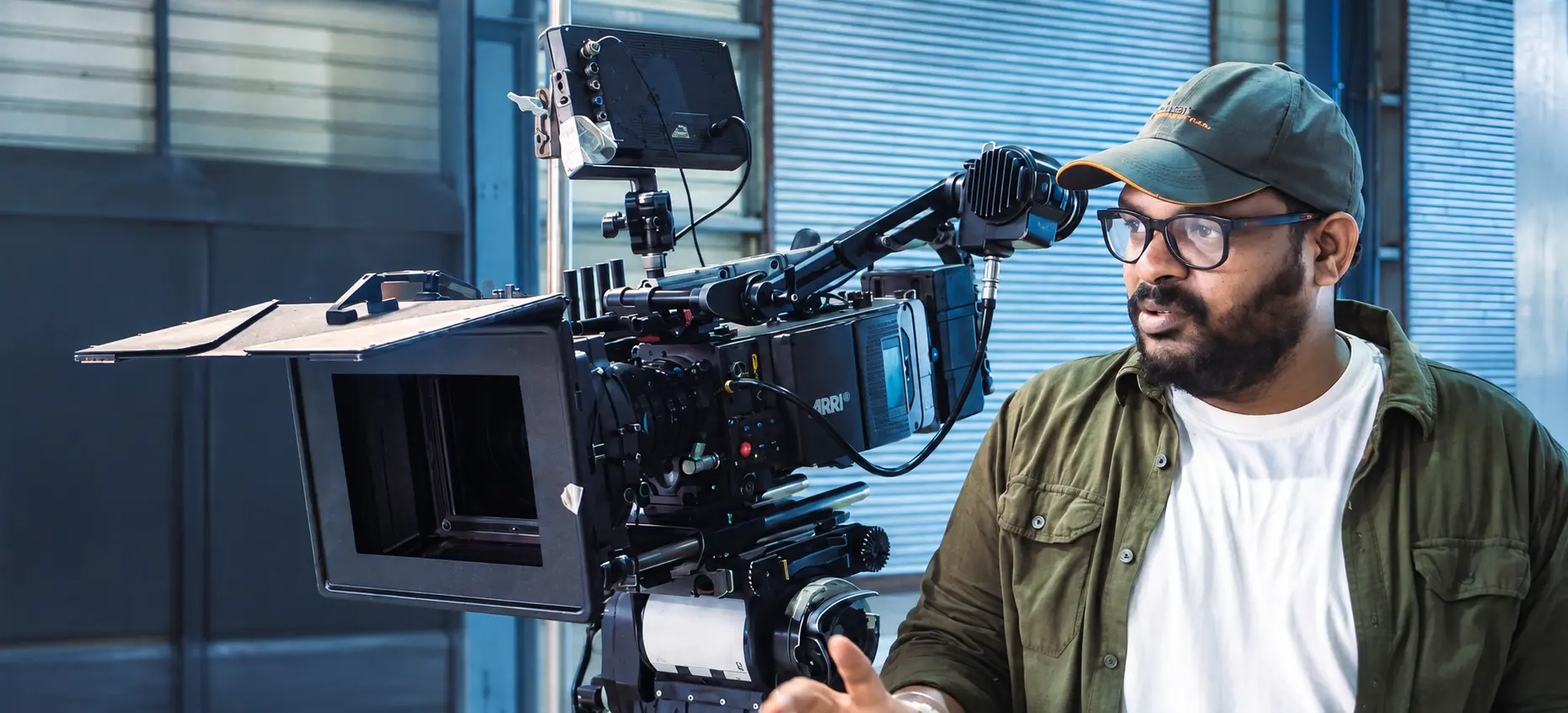
Framing the Shot: My Approach to Visual Storytelling
—By R.S. Anandakumar, DOP | Indian Cinematographer
For me, cinematography is not simply about placing a camera in front of a subject and recording what happens. It is about how we choose to see the story.
Every frame has a purpose. The position of the subject, the amount of space around them, the camera angle, the lens, the lighting, and even the shadows contribute to the emotion and meaning of a scene.
I believe framing is one of the most powerful tools a cinematographer has. A well-composed frame can communicate emotion, character, tension, scale, and atmosphere without saying a single word.
What Does Framing Mean to Me?
Framing is the process of composing everything that appears inside the camera frame.
When I frame a shot, I consider several elements:
Subject placement
Camera angle
Shot size
Headroom and lead room
Foreground and background
Symmetry and balance
Lines and shapes
Light and shadows
Negative space
These elements may seem small individually, but when they work together, they become a visual language.
Choosing the Right Shot Size
The size of the shot has a strong influence on how the audience experiences a scene.
An Extreme Wide Shot can establish the world around a character, communicate scale, or make a character feel isolated.
A Wide Shot allows the character and environment to work together. The location itself can become part of the storytelling.
A Medium Shot gives us a balance between the character and the surrounding environment and is especially useful for interactions and conversations.
A Close-Up brings the audience emotionally closer to the character. It allows facial expressions and subtle emotions to become important.
An Extreme Close-Up can direct the audience’s attention toward a specific detail—a person’s eyes, a hand, or an important object.
For me, the choice of shot size should always come from the story and emotion of the moment.
Composition Is Visual Storytelling
Composition determines where the audience looks first.
The Rule of Thirds is a useful principle, but I don’t believe cinematography should be restricted by rules. Sometimes a centered composition is exactly what the story needs. At other times, an off-center subject with significant negative space can create loneliness, uncertainty, or tension.
The important question is not, “Is this composition correct?”
The important question is:
“Does this composition communicate what the story needs?”
The Importance of Negative Space
Empty space can speak.
When I place a character on one side of the frame and leave a large amount of space around them, that space can create a feeling of isolation, anticipation, or uncertainty.
Negative space gives the audience room to think and feel.
Sometimes, what we choose not to show can be just as powerful as what we place inside the frame.
Guiding the Audience’s Eye
A cinematographer has the responsibility of guiding the audience’s attention.
Leading lines created by roads, walls, windows, architecture, shadows, or other elements can naturally direct the viewer toward the subject.
Lighting also plays an important role. A face illuminated against a darker background immediately becomes a visual focal point.
I always try to make sure that every important element within the frame has a reason to be there.
Camera Angles and Perspective
Camera angles can change the way an audience perceives a character.
A low-angle shot can make a character feel powerful or dominant.
A high-angle shot can make a character appear vulnerable or powerless.
An eye-level shot can create a more natural and neutral relationship with the character.
A Dutch angle can introduce instability, discomfort, or psychological tension.
For me, camera angles should never be chosen simply because they look stylish. They should have a dramatic or emotional purpose.
Framing Characters Through Their Environment
I also enjoy using the environment itself to frame a character.
Doorways, windows, arches, curtains, mirrors, shadows, and architectural elements can naturally create frames within the frame.
This technique can isolate the character, create depth, and tell the audience something about their relationship with the environment.
The location is not just a background. It can become part of the character’s story.
Creating Depth in a Frame
One of the things that can make an image feel cinematic is depth.
I often think about a frame in three layers:
Foreground + Subject + Background
A foreground element can add visual interest and depth. The subject becomes the primary focus, while the background provides context.
Lens selection, perspective, lighting, and focus can all help create this sense of depth.
A cinematic frame should feel like a world—not simply a flat picture.
Framing for Emotion
For me, the most beautiful frame is not necessarily the most effective frame.
Before framing a shot, I ask myself:
What should the audience feel at this moment?
A tight close-up can create intimacy.
A wide frame can communicate loneliness.
Symmetry can create a feeling of order or control.
An unbalanced composition can create tension.
A silhouette can create mystery.
The frame must serve the emotion.
My Responsibility as a Cinematographer
Cinematography is a collaboration between story, camera, lens, lighting, movement, composition, and performance.
As a cinematographer, I don’t simply capture what is happening in front of the camera. I make visual decisions that influence how the audience experiences the story.
Every frame is an opportunity to communicate something.
That is why I believe cinematography should always begin with the story.
Frame With Purpose
Before I press the record button, I ask myself:
What is the story?
What should the audience notice?
What should they feel?
And why should I frame the shot this way?
When every element has a purpose, the frame becomes more than an image.